
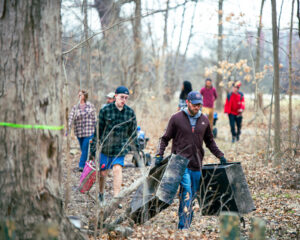
 With support from the Americana Foundation, Friends of Rouge Park plans to strengthen community-driven stewardship of Rouge Park – one of the most ecologically significant and under-resourced landscapes in Southeast Michigan. At more than 1,100 acres, Rouge Park contains 4.7 miles of the Rouge River, a major tributary to the Detroit River and Lake Erie, and plays a critical role in filtering stormwater, reducing pollution, and protecting downstream Great Lakes water quality.
Despite its importance, Rouge Park sits within a highly urbanized watershed shaped by decades of industrial activity, unmanaged stormwater, and combined sewer overflows. Much of the region’s historic wetlands have been lost, placing increasing pressure on the park’s remaining forests, prairies, and floodplains to absorb runoff and filter pollutants. These ecological challenges are inseparable from community impacts: more than 100,000 residents live near the park, many in neighborhoods that experience recurrent flooding and its associated health and economic burdens.
Friends of Rouge Park has spent more than two decades building a model of stewardship rooted in community engagement and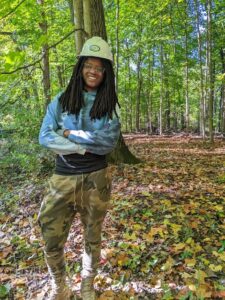 local leadership. This grant supports the organization’s next phase of work: expanding and formalizing a stewardship program that equips residents not only to participate in restoration activities, but to lead them. Through its Lead Steward model, community members receive training and stipends to organize workdays, guide volunteers, and serve as long-term stewards of the park’s natural areas. Over the course of the project, the organization expects to engage hundreds of volunteers in hands-on work including invasive species removal, native planting, and habitat restoration across dozens of acres.
Equally important, this work is intentionally structured to align with and leverage significant public investment in Rouge Park. As the City of Detroit advances its first comprehensive Master Plan and implements major stormwater infrastructure improvements – including systems designed to use the park’s natural landscapes to filter millions of gallons of runoff – Friends of Rouge Park is working to ensure that these investments translate into long-term ecological and community benefits. By coordinating closely with the City’s natural areas team and other partners, the organization is helping to build a shared framework for managing and restoring the park at a scale that matches the challenges facing the watershed.
This project reflects a core principle of Americana’s Natural Resources program: durable improvements in Great Lakes water quality depend on local capacity. Volunteer events alone are not enough. What is required is sustained, community-based stewardship – grounded in relationships, supported by training and leadership development, and connected to broader watershed strategies. By investing in people as well as place, Friends of Rouge Park is building the conditions necessary for long-term restoration in one of the Great Lakes region’s most heavily impacted urban watersheds.
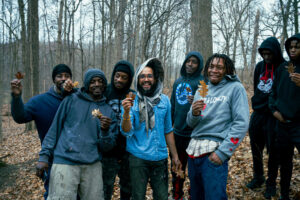
At the same time, the work offers a model for other communities. Rouge Park sits at the intersection of ecological restoration, public infrastructure, and community resilience. The approach being developed here – combining resident-led stewardship, public-private collaboration, and alignment with large-scale infrastructure investment – has the potential to inform similar efforts across the Great Lakes basin, particularly in communities where environmental burdens and resource gaps are most acute.