
Native plants play an important role in protecting Michigan's natural resources. They provide habitat and food for birds and pollinators, help prevent erosion, and support the health of coastal ecosystems. Yet in Michigan's Upper Peninsula, finding native plants and seeds adapted to the region's climate can be difficult.
In 2021, the Americana Foundation awarded a $22,500 grant to the Superior Watershed Partnership (SWP) to establish the Upper Peninsula Community Native Plant and Seed Bank. Working with local partners, SWP sought to develop a sustainable supply of locally adapted native plants and seeds for environmental restoration projects throughout the region.
The project exceeded its initial goals. SWP and its partners established five community gardens containing more than 27 native plant species. During the first year, the gardens produced more than 65,000 native pollinator seeds, including several varieties of milkweed and black-eyed Susan. These seeds provide a renewable resource for future restoration efforts and support important pollinators, including monarch butterflies.
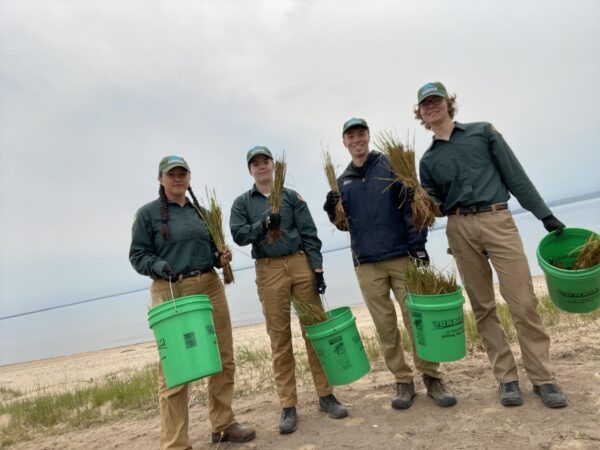
The grant also supported the creation of a native beach grass nursery to help restore Lake Superior's shoreline. Beach grass grown at the nursery is used to stabilize coastal dunes and combat erosion. The nursery was designed to provide an ongoing supply of native plants for restoration projects undertaken by SWP's Great Lakes Climate Corps (GLCC).
Community engagement was central to the project's success. Working with Partridge Creek Farm, local schools, the cities of Ishpeming and Marquette, Northern Michigan University students, and other community partners, SWP engaged more than 65 volunteers in constructing gardens, planting native species, maintaining garden beds, and harvesting seeds. The gardens also became outdoor classrooms, introducing local students to the importance of native plants and environmental stewardship. By developing a local source of native plants and seeds, the project addressed a practical obstacle to ecological restoration in the Upper Peninsula while creating opportunities for residents to participate directly in protecting their natural environment.
Today, the native plant and seed bank continues to support habitat restoration and conservation efforts throughout Michigan's Upper Peninsula and along the Lake Superior shoreline. Native seeds and beach grass cultivated through the project have been distributed and utilized in restoration initiatives to enhance biodiversity, improve pollinator habitat, stabilize coastal dunes, and prevent shoreline erosion. Each summer, SWP, GLCC, and community volunteers plant beach grass along Lake Superior's shoreline, helping restore sensitive coastal habitats and protect against erosion caused by wind, waves, and changing lake levels. Through these efforts, SWP and its partners are building long-term restoration capacity while engaging local communities in hands-on conservation and stewardship of the Upper Peninsula's natural resources.
The Americana Foundation is pleased to have supported this collaborative effort to strengthen local restoration capacity, protect Lake Superior's coastal habitats, and engage communities in the stewardship of Michigan's natural resources. More information about the Superior Watershed Partnership and this project is available on the SWP website.